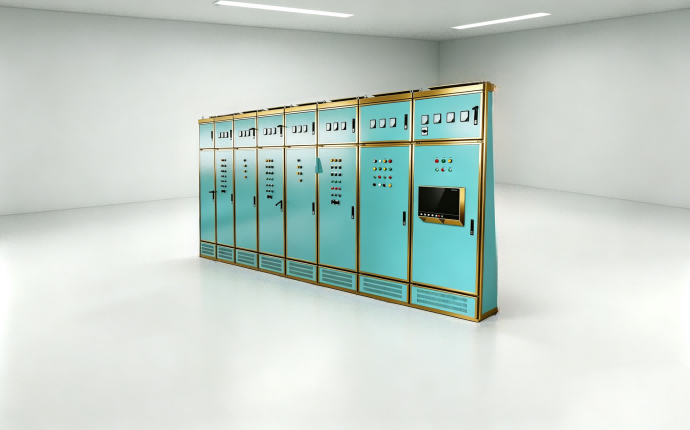
Smart Electrical Cabinets
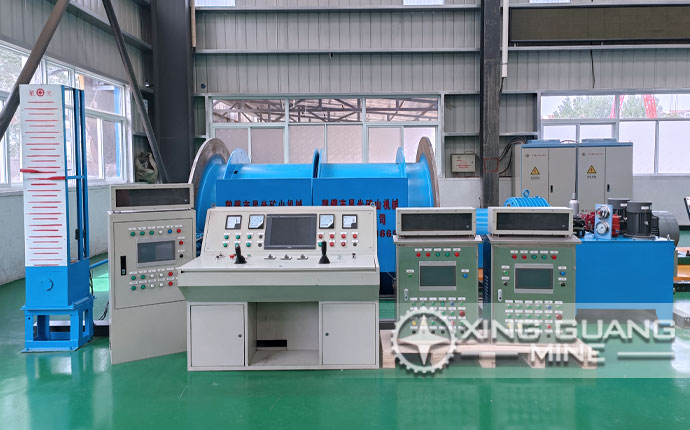
- Product introduction : As the “brain” of the sorting production line, this system integrates functions for power distribution, control, protection, and communication, ensuring the collaborative and automated operation of crushing, screening, air classification, and conveying equipment.
- INTRODUCTION
- SPECIFICATION
- RELATED
- INQUIRY
Product Introduction
The Smart Electrical Cabinets can be understood as the “smart nerve center” of industrial sites. It pre-integrates components such as PLCs, inverters, switch power supplies, and relays, which would traditionally require field assembly. These components are wired and tested in the factory, and the final product is a standardized cabinet that can be directly put into operation. This solution effectively replaces the traditional field-based installation and large-scale secondary wiring mode, addressing core issues like long design cycles, complicated onsite wiring, and difficult fault troubleshooting.
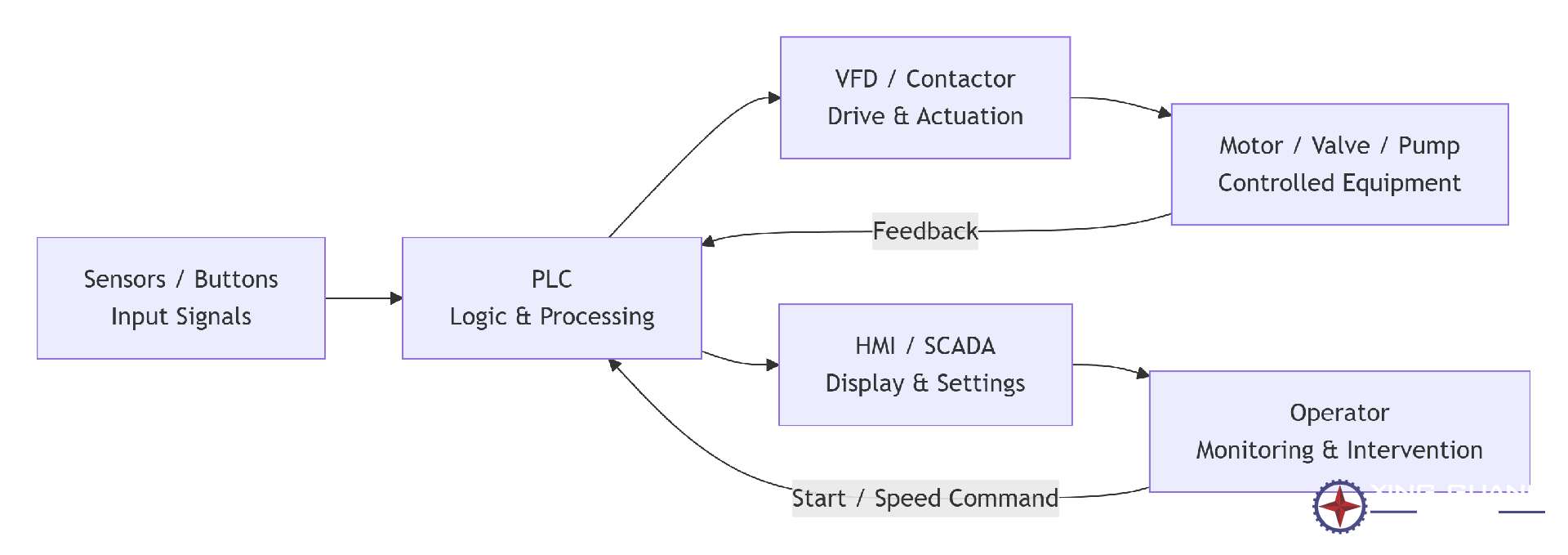
Workflow diagram
Working Principle
1. Control Center (PLC):
Serving as the “brain” of the cabinet, the PLC is responsible for executing programming, processing input signals, and issuing control commands. Through pre-set programs, it can manage complex process control tasks and communicate with the upper-level systems (such as DCS or SCADA) via Ethernet or other interfaces for remote monitoring.
2. Drive Center (Inverter):
The inverter controls the operation of motors, such as adjusting the speed of fans or pumps. By changing the motor’s operating frequency, the inverter not only facilitates smooth soft-starting, reducing mechanical impact, but also achieves significant energy savings.
3. Power Distribution Unit (Air Circuit Breakers, Contactors, Relays):
Responsible for power distribution and on/off control. The air circuit breaker provides overcurrent and short-circuit protection, while relays act as intermediate components to convert the PLC’s low-voltage signals to control contactors and other high-voltage equipment.
4. Interface and Protection Modules (Terminal Blocks, Power Supplies, Surge Protectors):
Ensures reliable connections for signals and power. The power supply provides stable 24V DC power to the PLC and other electronic devices. Surge protectors and temperature control devices safeguard the internal equipment from external impacts and environmental factors.
5. Human-Machine Interface (Touch Screen, Buttons, Indicator Lights):
Provides an interface for onsite operation and monitoring. Operators can use the touch screen to check equipment status, modify parameters, or manually start/stop equipment without needing to connect a computer.
Product Highlights
* Compact Design:
Integrated design saves 30% - 50% of installation space.
* Plug-and-Play:
Pre-wired and tested before delivery, reducing onsite construction time from several weeks to just 1-2 days.
* Stable and Reliable:
100% factory-tested, significantly reducing onsite fault rates by 90%.
* Smart Operation and Maintenance:
Supports remote monitoring, fault diagnosis, and predictive maintenance, enabling unmanned operation.
* Flexible Customization:
PLCs, inverters, and communication protocols can be selected according to specific industrial requirements, adapting to various industrial scenarios.
* Cost Reduction and Efficiency:
Reduces onsite construction and future maintenance costs, offering a lower total cost of ownership over the entire product lifecycle.
| Model | Applicable Power (kW) | Input Voltage (V) | Output Circuits | Control System | HMI | Protection Grade | Cabinet Dimension (mm) | Installation Type | Communication Protocol | Applicable Equipment |
| ECC-15A | 7.5-15 | 380 | 4-8 | PLC Automatic Control | 7" HMI | IP54 | 800×600×2200 | Floor-mounted | Modbus RTU | Small Conveying Equipment & Feeders |
| ECC-30A | 15-30 | 380 | 8-12 | PLC + Variable Frequency Control | 10" HMI | IP54 | 1000×700×2200 | Floor-mounted | Profibus/Modbus | Medium-small Automation Line |
| ECC-55A | 30-55 | 380 | 12-18 | Intelligent Centralized Control | 10" HMI | IP55 | 1200×800×2200 | Floor-mounted | Profinet/Ethernet | Waste Sorting & Conveying System |
| ECC-90A | 55-90 | 380 | 18-24 | PLC Remote Control System | 12" HMI | IP55 | 1600×800×2200 | Floor-mounted | Ethernet/IP | Large Industrial Automation Equipment |
| ECC-132A | 90-132 | 380 | 24-36 | Intelligent Central Control System | 15" HMI | IP55 | 1800×1000×2200 | Floor-mounted | Profinet/Modbus TCP | Large Solid Waste Treatment Line |
| ECC-200A | 132-200 | 380 | 36-48 | DCS Integrated Control System | 15" HMI | IP65 | 2200×1000×2200 | Floor-mounted | Industrial Ethernet | Large Intelligent Factory & Continuous Production System |
application