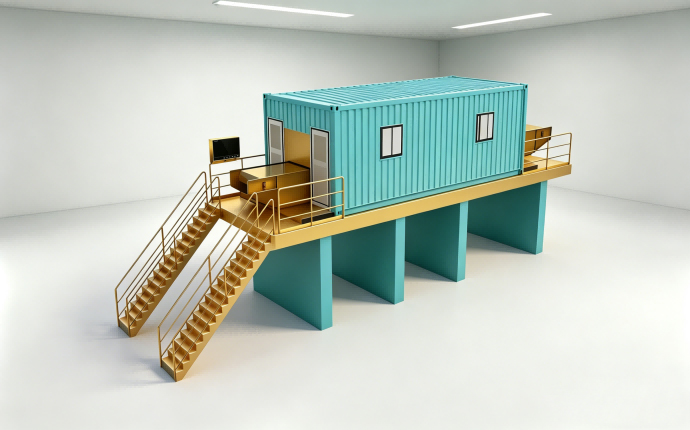
Manual Sorting Platform
- Product introduction : Manual sorting remains a crucial process for recovering high-value materials in waste recycling. This platform is specifically designed for household waste, mixed solid waste, and recyclable materials, balancing efficiency, safety, and comfort.
- INTRODUCTION
- SPECIFICATION
- RELATED
- INQUIRY
Product Introduction
The manual sorting platform is mainly used in waste treatment lines where mechanical sorting is not sufficient. It is primarily used before the drum screen to sort out large contaminants and at the sorting point after the wind separation of recyclables. The sorting platform can be designed based on actual conditions, with manual sorting stations set on both sides of the sorting hopper. When designing, simply increase the number of workstations and their spacing. Workers can throw the sorted materials into the hopper, where they will fall into the lower layer of a dual-layer sorting chamber. The lower layer can be equipped with a receiving waste bin, into which the materials will fall.
workflow diagram

Working Principle
Step 1: Pre-treatment and Feeding
* Before entering the sorting line, the waste is first processed by a bag breaker to open the bags. The waste is then classified by drum screens based on particle size (the material passing through the screen is usually residual waste, while the material left on top of the screen consists of larger waste items).
Step 2: Mechanical Pre-sorting
* Magnetic Separator: Removes iron cans and other ferrous metals.
* Air Separator: Separates light materials like plastics and paper from heavier materials like glass and stones.
Step 3: Manual Sorting (Core Step)
This is the critical point where human intervention is needed. Workers stand on both sides of the conveyor belt and sort materials based on experience and visual inspection.
* Safety Check: Workers remove long ropes, clothing, and large fabric items that may entangle the equipment.
* Quality Sorting: After automatic sorting, workers pick out materials that do not meet color or material standards (e.g., mixed PET bottles), ensuring the purity of the recyclables.
Product Highlights
* High Flexibility: Suitable for a wide range of sorting requirements, adapting to complex and variable needs.
* High Sorting Accuracy: Meets the high standards for material quality and classification.
* Cost Adaptability: Reduces the investment threshold for small to medium-sized operations or customized requirements.
* Wide Compatibility: Can be used across various industries and for multiple material types.
* Strong Control Over the Process: Facilitates management and quality traceability, ensuring consistency and accountability in operations.
| Model | Capacity (T/H) | Sorting Stations | Platform Length (mm) | Belt Width (mm) | Platform Height (mm) | Installed Power (kW) | Equipment Dimension (mm) | Weight (T) | Application Materials | Application Area |
| MSP-6000 | 5-10 | 4-6 | 6000 | 800 | 1200 | 3 | 6500×1800×2500 | 2.5 | MSW, Recyclable Materials | Small Waste Sorting Line |
| MSP-8000 | 10-20 | 6-8 | 8000 | 1000 | 1200 | 4 | 8500×2200×2600 | 3.8 | MSW, Decoration Waste | Medium-small Recycling Center |
| MSP-10000 | 20-35 | 8-10 | 10000 | 1200 | 1200 | 5.5 | 10500×2500×2800 | 5.2 | Construction Waste, Industrial Waste | Medium Waste Treatment System |
| MSP-12000 | 35-50 | 10-12 | 12000 | 1400 | 1200 | 7.5 | 12600×2800×3000 | 6.8 | Mixed Solid Waste, Recyclables | Large Continuous Sorting Line |
| MSP-15000 | 50-80 | 12-16 | 15000 | 1600 | 1200 | 11 | 15800×3200×3200 | 9.5 | Large MSW, Industrial Waste | Large Recycling Processing Center |
| MSP-18000 | 80-120 | 16-20 | 18000 | 1800 | 1200 | 15 | 18800×3600×3500 | 12.8 | Bulk Mixed Waste, Recyclable Resources | Large Solid Waste Sorting System |
application