Waste Incineration System
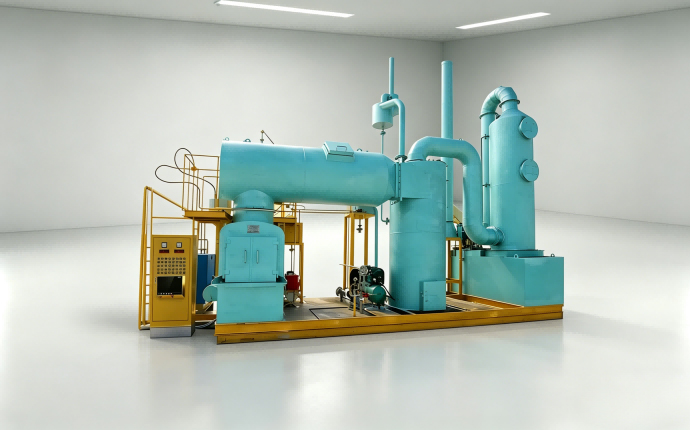
- Product introduction : Designed for household waste, industrial solid waste, and high-calorific value waste, this equipment significantly reduces volume and weight through high-temperature incineration while simultaneously recovering energy and disposing of waste in an environmentally harmless manner, truly “turning waste into energy.”
- INTRODUCTION
- SPECIFICATION
- RELATED
- INQUIRY
Product Introduction
Modern waste incineration systems are no longer the traditional “burning of garbage”; instead, they function as a modern “Urban Energy Station”, integrating harmless waste treatment, energy conversion, and resource regeneration. Through a series of advanced technologies, they transform municipal solid waste into electricity and heat energy, while converting the waste residue into construction materials. In simple terms, the working principle of this system can be summarized as “One Burn, Three Uses”: burn the waste, use the heat generated for power generation and heating, and turn the residue into building materials.
workflow diagram
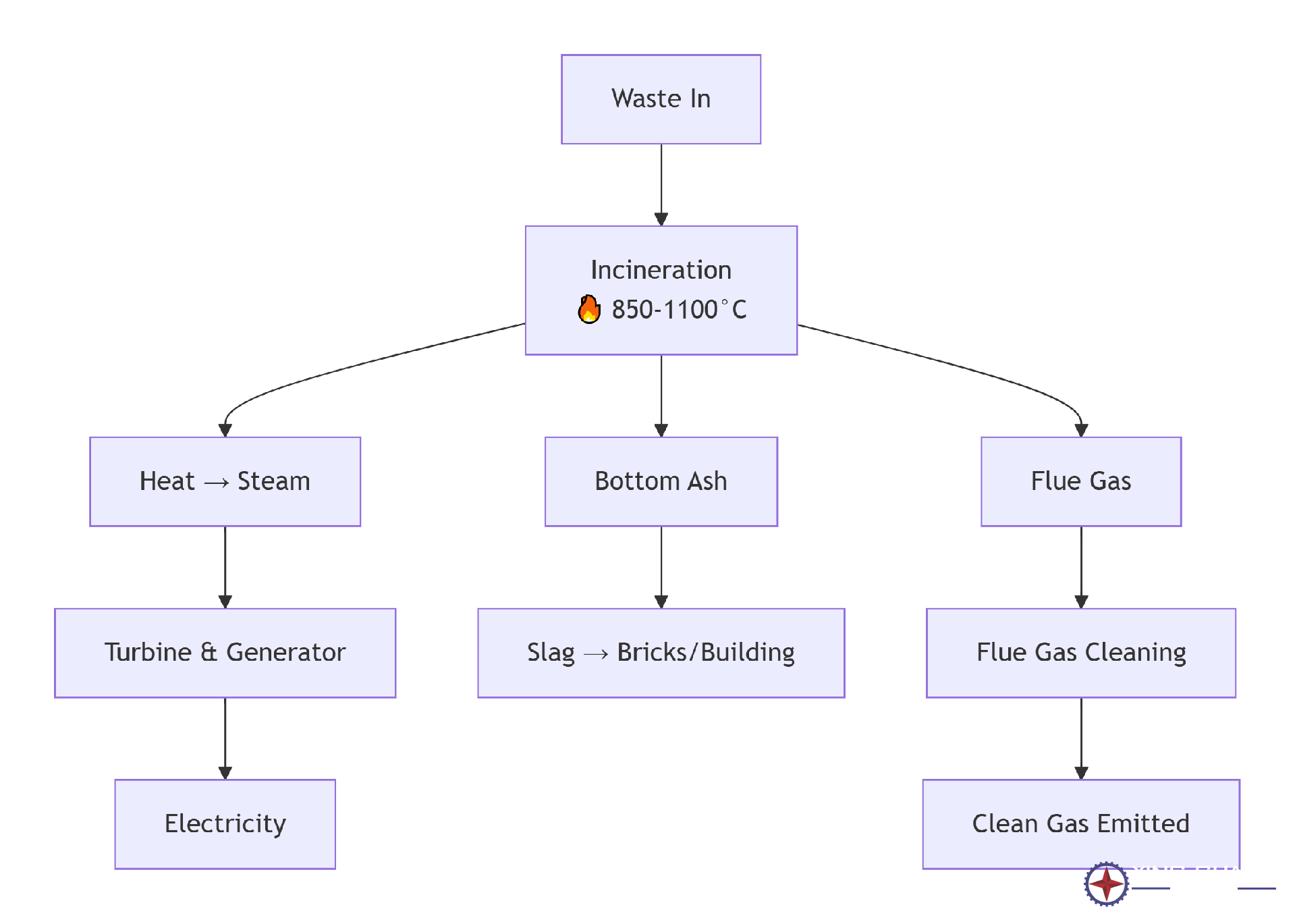
Working Principle
1. High-temperature combustion:
The waste is completely burned at a high temperature of 850°C - 1100°C in the furnace chamber.
2. Three-step process (Waste journey in the furnace):
* Drying: The moisture in the waste is evaporated by the high temperature.
* Combustion: Organic materials ignite and burn vigorously, releasing a large amount of heat energy.
* Ashing: The remaining residue is further burned down to become harmless ash.
3. Three outputs:
* Heat Energy - Power Generation: High-temperature flue gas heats water, turning it into steam, which drives a turbine to generate electricity.
* Ash - Building Materials: The solid ash remaining from the burning process is used to make paving bricks.
* Flue Gas - Air Purification: Toxic flue gases go through multiple stages of purification, including denitration, desulfurization, and dust removal, before being safely discharged.
Product Highlights
Compared to traditional landfilling, waste incineration power generation has overwhelming advantages:
* Significant Reduction: After incineration, the volume of waste is reduced by 80%-90%, and the weight decreases by approximately 75%, greatly alleviating the pressure of “waste siege”.
* Resource Utilization: One ton of waste generates about the same amount of electricity as a typical three-person household consumes in a year. For example, the Asuwei Incineration Plant in Beijing generates 420 million kilowatt-hours of green electricity annually, which is fed into the power grid. The treated ash residue can also be made into eco-friendly bricks for paving, with a resource recovery rate exceeding 90%.
* Harmless Treatment: The high temperature (850°C - 1100°C) completely kills various pathogens and effectively decomposes toxic organic substances like dioxins. Combined with the advanced flue gas purification system, this ensures effective control of secondary pollution.
| Model | Capacity (T/D) | Incinerator Type | Power Generation Capacity (kW) | Installed Power (kW) | Flue Gas Treatment System | Control System | Equipment Dimension (mm) | System Weight (T) | Application Waste Type | Application Area |
| INC-100 | 50-100 | Mechanical Grate Furnace | 1500-2500 | 120-180 | Semi-dry Process + Bag Filter | PLC Automatic Control | 22000×8000×12000 | 85 | MSW, General Solid Waste | Small Waste Incineration Station |
| INC-200 | 100-200 | Mechanical Grate Furnace | 2500-5000 | 180-260 | Semi-dry Process + Activated Carbon Adsorption | PLC + HMI Control | 32000×10000×15000 | 135 | MSW, Decoration Waste | Medium-small Waste-to-Energy Plant |
| INC-350 | 200-350 | Circulating Fluidized Bed Furnace | 5000-8000 | SNCR Denitrification + Bag Filter | Intelligent Centralized Control System | 45000×12000×18000 | 220 | Mixed Waste, Industrial Waste | Medium Waste Incineration Power System | |
| INC-500 | 350-500 | Mechanical Grate Incinerator | 8000-12000 | 420-650 | SCR Denitrification + Flue Gas Purification | DCS Central Control System | 58000×15000×22000 | 360 | MSW, Industrial Waste | Large Municipal Waste Treatment Center |
| INC-800 | 500-800 | Large Circulating Fluidized Bed Furnace | 12000-18000 | 650-980 | Complete Flue Gas Purification System | Industrial Internet Control System | 76000×18000×26000 | 520 | Urban MSW, Bulk Industrial Waste | Large Waste-to-Energy Plant |
| INC-1200 | 800-1200 | Large Mechanical Grate Furnace | 18000-30000 | 980-1500 | Ultra-low Emission Flue Gas Treatment System | Intelligent DCS Control Platform | 98000×22000×32000 | 780 | Urban Waste, Industrial Solid Waste, Biomass Waste | Large Urban Energy Center |
application