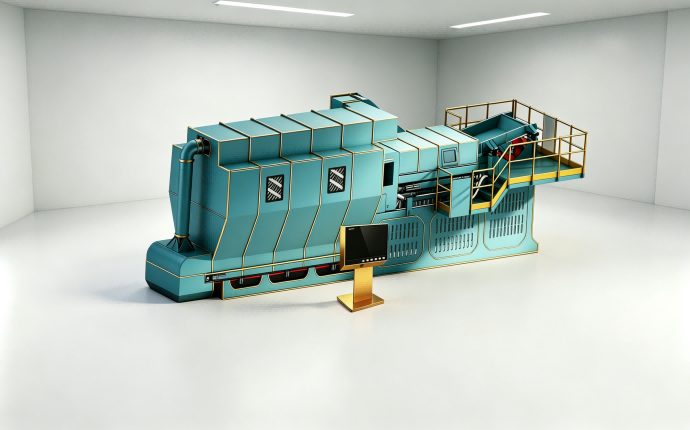
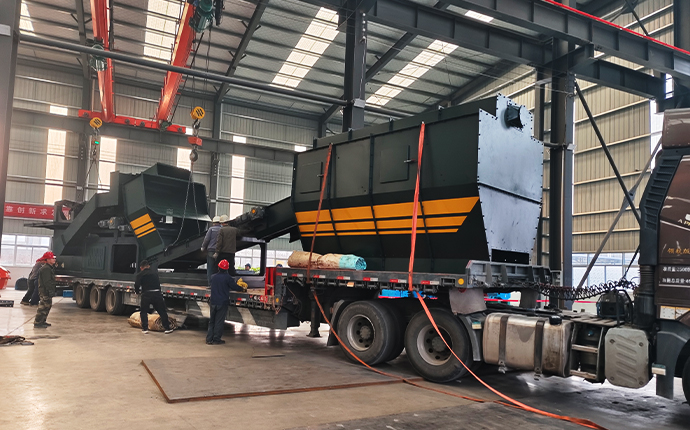
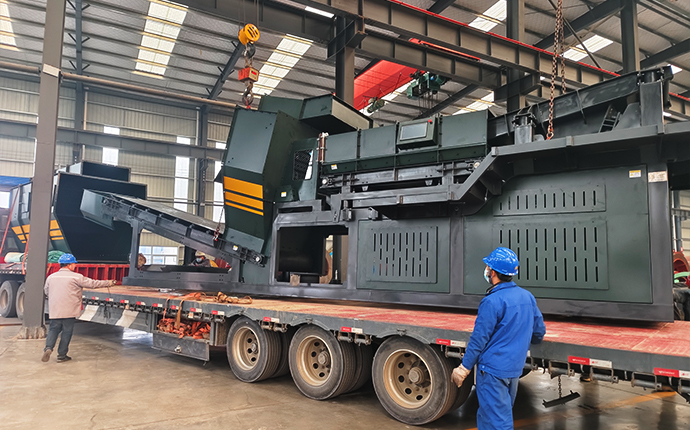
Comprehensive Air Separation Machine
- Product introduction : The air classifier mainly consists of components such as a circulating fan, separation drum, conveyor, diffuser chamber, and dust collector. The device relies on aerodynamic principles, using controllable airflow as the sorting medium. It separates materials based on their density and particle size. Lighter impurities, such as paper, plastic, dry leaves, and fluff, are carried upward or horizontally by the airflow, while heavier materials fall due to gravity, utilizing inertia to complete the settling process, thus achieving efficient separation of light and heavy materials.
- INTRODUCTION
- SPECIFICATION
- RELATED
- INQUIRY
workflow diagram

Working Principle
1. Feeding and Dispersion:
Materials are fed into the equipment via a vibrating feeder or conveyor belt. To ensure sorting accuracy, materials usually need to be pre crushed, allowing different components to be fully separated for effective identificationby the air separator.
2. Airflow Classification:
This is the key stage. Under the combined action of controllable positive pressure airflow (blowing) and negative pressure airflow (suction), light materials (such as plastic bags, films, foam, and light wood chips) are carried away by the airflow and collected in the cyclone dust collector or settling chamber. Heavy materials (such as bricks, metals, and glass) are not supported by the airflow and naturally settle under gravity, then discharged through the material outlet conveyor at the bottom of the equipment.
3. Auxiliary Screening and Magnetic Separation:
To improve purity, the equipment often integrates additional functions. For example, a magnetic separator may be installed at the front end to remove ferromagnetic metals, and a vibrating screen may be added internally to further classify heavy materials by particle size, achieving “multi-functionality in one machine.”
Core Advantages
1. High Sorting Accuracy, Replaces Manual Labor:
Compared to traditional manual sorting, the integrated air separator is highly efficient. It effectively separates light contaminants from materials that are difficult to manually sort, ensuring that the heavy materials (such as recycled metals) have a low impurity content and high purity. The separation rate of light materials can reach over 90%.
2. Environmental Protection, Dust Free:
Modern air separators typically adopt negative pressure design or internal circulating airflow systems. During operation, airflow circulates within the equipment, preventing dust from escaping. With the help of cyclone or bag filters, dust is concentrated, settled, and discharged, significantly improving the working environment.
3. Modular Structure, Easy Maintenance:
The equipment is usually designed with a modular structure, compact in size and occupying less space. Since it mainly operates using airflow, it has fewer wear parts and low maintenance costs. Additionally, the system is often integrated intoa single unit, making installation easy—just connect the power on-site to begin operation.
Product Highlights
* Good Separation Effect | High Flexibility | Adjustable Negative Pressure / Airflow
* Fully utilizes air dynamics to achieve excellent separation of light and heavy materials.
* The angles of the feeding conveyor and the air blow nozzle are adjustable within 90°, providing high flexibility and strong adaptability.
* The expansion chamber operates under a negative pressure environment, enhancing the separation effect between light materials and air.
* The wind fan separator is equipped with airflow and pressure control valves, allowing flexible adjustment of the airflow to the nozzle and dust filter.
| Model & Spec | Capacity (T/H) | Air Volume (m³/h) | Sorting Efficiency (%) | Fan Power (kW) | Conveyor Belt Width (mm) | Separation Drum Diameter (mm) | Dimensions (L×W×H) (mm) | Weight (T) | Application Materials | Application Area |
| AFS-600 | 5-15 | 8000-12000 | 75-85 | 11 | 600 | 800 | 5200×2200×2800 | 4.5 | Paper, Plastic Film, MSW | Small Waste Sorting System |
| AFS-800 | 15-30 | 12000-18000 | 80-88 | 18.5 | 800 | 1000 | 6200×2500×3200 | 6.8 | Decoration Waste, Industrial Waste, Light Impurities | Medium-small Recycling System |
| AFS-1000 | 30-50 | 18000-26000 | 85-92 | 30 | 1000 | 1200 | 7600×2800×3600 | 9.5 | Construction Waste, Mixed MSW | Medium Continuous Air Separation System |
| AFS-1200 | 50-80 | 26000-38000 | 88-94 | 45 | 1200 | 1400 | 9200×3200×4200 | 13.5 | Recyclables, Industrial Waste | Large Waste Treatment Line |
| AFS-1400 | 80-120 | 38000-50000 | 90-95 | 55 | 1400 | 1600 | 10800×3600×4600 | 18 | Plastic, Paper, Mixed Light & Heavy Waste | Large Recycling Processing Center |
| AFS-1600 | 120-180 | 50000-68000 | 92-96 | 75 | 1600 | 1800 | 12500×4200×5200 | 25.5 | Bulk Mixed Waste, Industrial Waste | Large Intelligent Air Separation System |
| AFS-1800 | 180-260 | 68000-85000 | 93-97 | 90 | 1800 | 2000 | 14500×4800×5800 | 36 | Urban MSW, Recyclable Resources | Super Large Solid Waste Sorting System |
application