English
Mine Super Elevator – The Core Mine Hoist Guide
2026-06-06 14:55:56
2026-06-06 14:55:56
Mine’s Super Elevator: Core Equipment Supporting Full Mine Operation | All You Need to Know About Mine Hoists
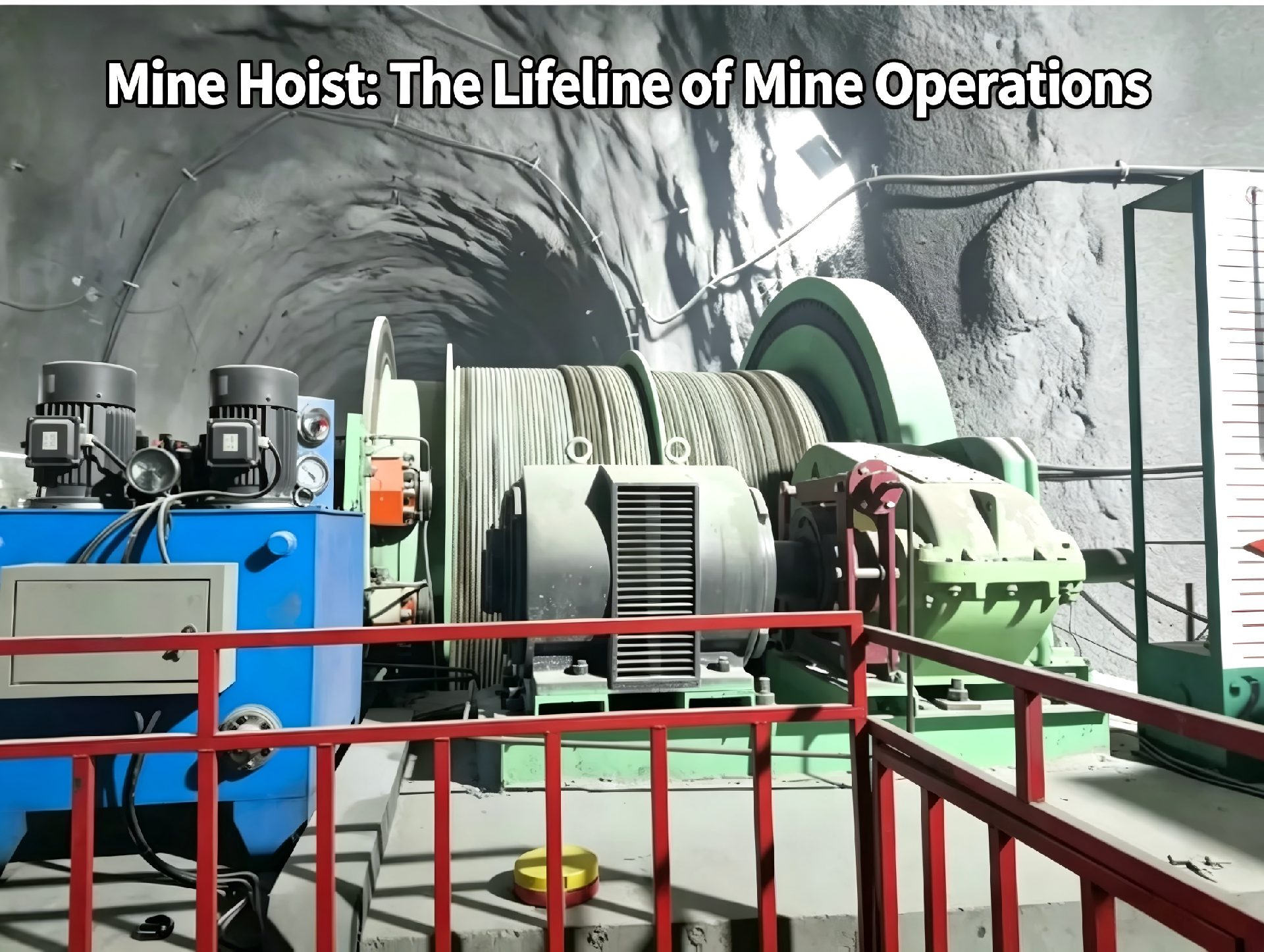
Elevators are common vertical transport for daily passenger trips, while underground mines rely on heavy-duty lifting machinery tailor-made for mining: the mine hoist, known as the "lifeline equipment" of underground mining operations.
Unlike sleek civilian elevators, these rugged units handle ore haulage, miner transit and equipment/material delivery, standing as indispensable core machinery for mineral exploitation. Though unfamiliar to most people, uninterrupted hoist operation is vital to mine production. This article introduces the core functions and strengths of mine hoists in plain terms.
I. What Exactly Is a Mine Hoist?
Simply put, a mine hoist is a heavy-duty vertical conveyance engineered for harsh underground mine conditions, comparable to an ultra-heavy-duty custom mine elevator.
Far from civilian lifts prioritizing comfort and appearance, mine hoists feature outstanding load capacity, robust durability, stable performance and strong corrosion resistance. Designed specifically for dusty, humid and high-load underground environments, they use steel wire ropes, mine cages and skip buckets to move personnel, supplies and machinery between surface and underground workings as critical special mining equipment.
II. Mine Hoist: Backbone of Underground Mine Haulage
A staple throughout the entire mining cycle, mine hoists serve three primary purposes:
1. Core Function: Ore & Bulk Material Conveyance Its principal role is transporting bulk coal, metallic ores and gangue from underground to the surface via skip buckets and mine cars, forming the exclusive primary haulage channel for mined products.
2.Fundamental Support: Personnel & Supply Transportation Miners’ commuting between surface and underground, delivery of construction consumables, support fittings and faulty equipment all depend on hoists to connect underground workings with ground facilities and sustain orderly mining.
3. Emergency Backup: Underground Rescue Operations During underground accidents or emergencies, hoists act as key emergency gear to deploy rescue crews and emergency supplies, safeguarding underground worker safety.
III. Core Competitive Advantages
Conventional lifting gear cannot withstand tough mine conditions; three key merits secure the dominant position of mine hoists:
✅ Ultra-high load-bearing capacity: Capable of long-duration heavy-load continuous operation to meet large-volume bulk ore transportation demands and boost mining efficiency.
✅Resilience against harsh underground conditions: Specially manufactured to resist dust, moisture, corrosion and abrasion with explosion-proof construction for hazardous underground atmospheres, enabling round-the-clock stable running.
✅Comprehensive safety protection configuration: Equipped with full safety systems including fall arrest braking, overload protection, travel limit shutdown, rope-break protection and emergency stop devices. The unit locks down automatically upon overload, overtravel or mechanical faults to prevent safety incidents.
IV. Two Main Classifications for Different Mining Needs
1. Skip Hoist
Exclusively for bulk ore and waste rock haulage with large throughput and high automation; not permitted for passenger transport, the workhorse for mine production.
2. Cage Hoist
Serves as the mine’s passenger elevator for miners plus small spare parts and tools. Built to stricter safety standards and sturdier structures for personnel transit.
Conclusion
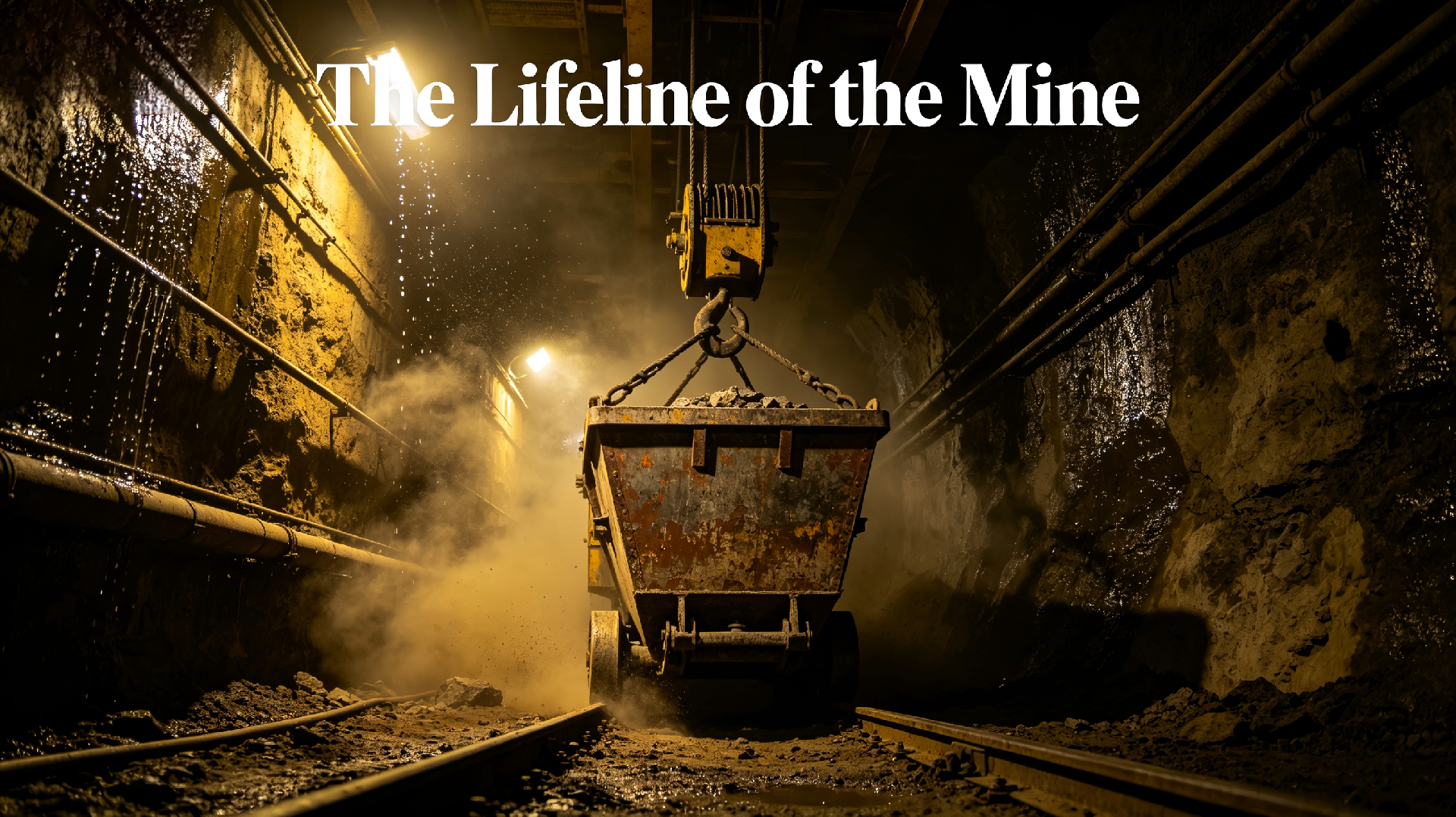
💡 A mine hoist is heavy-duty vertical lifting machinery and the operational lifeline of underground mines.
💡 Differentiated from civilian elevators by heavy load capacity, rugged build, explosion-proof design and high safety standards for hostile subsurface environments.
💡 Integrates ore haulage, personnel transit and material delivery to underpin full mining activities.
💡Split into skip and cage variants for dedicated cargo and passenger transport respectively to ensure safe and efficient mining.
Unassuming in appearance yet irreplaceable, mine hoists remain an unsung core cornerstone of the global mining industry.
Previous Page:
Next Page:
-
Starlight Environmental Intelligence – Turning Coal Gangue into Treasure, Unlocking a New Path for Solid Waste Resource Utilization2026-05-13 14:12:02
-
Turning Waste into Treasure! Construction Waste Resource Utilization Technology Unlocks a New Path for Green Development2026-04-08 13:31:48
-
Popular science of mine hoist2024-01-11 16:33:48
-
Mine Super Elevator – The Core Mine Hoist Guide2026-06-06 14:55:56
-
Urban Renewal Construction Waste: Challenges and Solutions2026-06-04 10:24:06
-
Struggling with Clay-Stone Mix? Xingguang Clay-Stone Separator – Clean Aggregates Made Easy.2026-05-20 10:50:55
-
Solid Waste Treatment Boom – Xingguang Leads the Way.2026-05-02 10:37:56
-
Starlight Environmental Intelligence Solves Screening Challenges of Wet, Sticky, and Entangling Materials with Shaftless Trommel Screen2026-04-26 10:58:29
-
How to Solve Solid Waste Sorting Challenges? Starlight Environmental Intelligence’s Integrated Air Classifier Ushers in a New Paradigm for Green Sorting2026-04-21 13:11:00
-
Dust-Free & Energy-Smart: Starry Eco Revolutionizes Industrial Conveying2026-03-11 10:46:24
-
New "Ten Rules for Solid Waste" Policy Takes Effect, Injecting Powerful Momentum into the Waste Resource Utilization Industry and Unfolding a Billion-Yuan Green Market Blueprint2026-03-01 14:29:33
-
Xingguang Mining Delivers Core Mining Equipment to a Coal Mine in Guizhou2025-08-23 13:12:55
-
Steel Backbone: The Mine Fight of JK Mine Hoist2025-07-14 08:20:03
-
Xingguang Mining Shines at China-Africa Economic and Trade Expo, Unveiling a New Chapter of Win-Win Cooperation2025-06-23 10:31:00
-
Xingguang Mining Machinery: Innovating Mine Hoisting Solutions2025-06-19 08:27:25
Quick
consultation
The Hebi starlight Mining Machinery Manufacturing Co., Ltd. was registered as a limited liability company on March 23, 1997, is a professional company that produces and sells mining hoisting winch, mine hoist and accessories.
Products
Copyright © 2025 Hebi Xingguang Mining Machinery Manufacturing Co., Ltd.