English
Turning Waste into Treasure! Construction Waste Resource Utilization Technology Unlocks a New Path for Green Development
2026-04-08 13:31:48
2026-04-08 13:31:48
With the acceleration of urban construction, the problem of construction waste "encircling the city" has become a critical pain point. Resource utilization offers both environmental and economic benefits, representing a key direction for the green transformation of the construction industry. Below is a detailed analysis of the core elements of such projects.
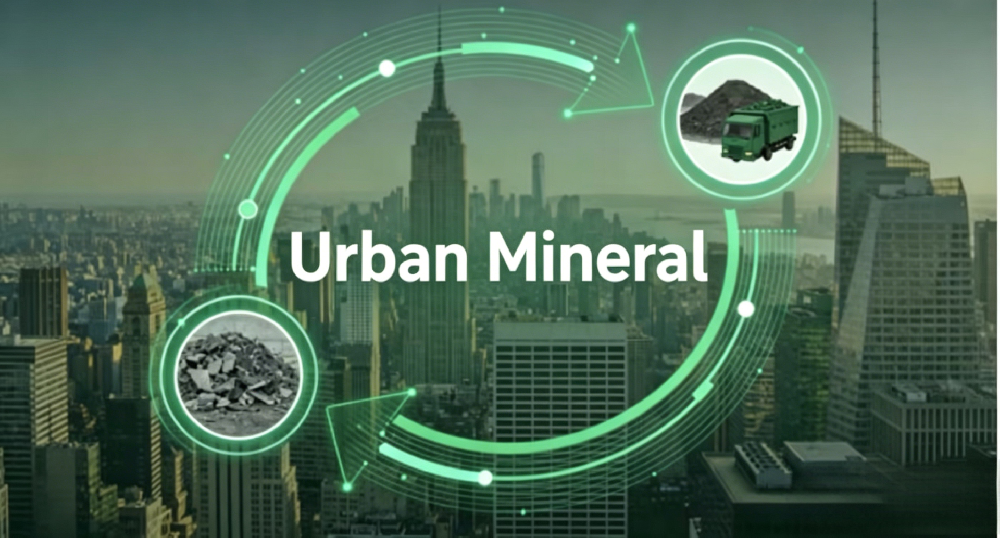
1. Project Overview
Construction waste resource utilization projects are built on the core principles of "reduction, resource recovery, and无害化 (harmlessness)." They professionally process demolition waste, renovation waste, engineering spoil, and slurry, converting them into recycled building materials and subbase materials. These projects integrate collection, treatment, processing, and sales, effectively solving the problem of waste pollution while replacing natural resources. With increasing policy support and broad market potential, site selection follows principles such as proximity disposal and environmental compliance.
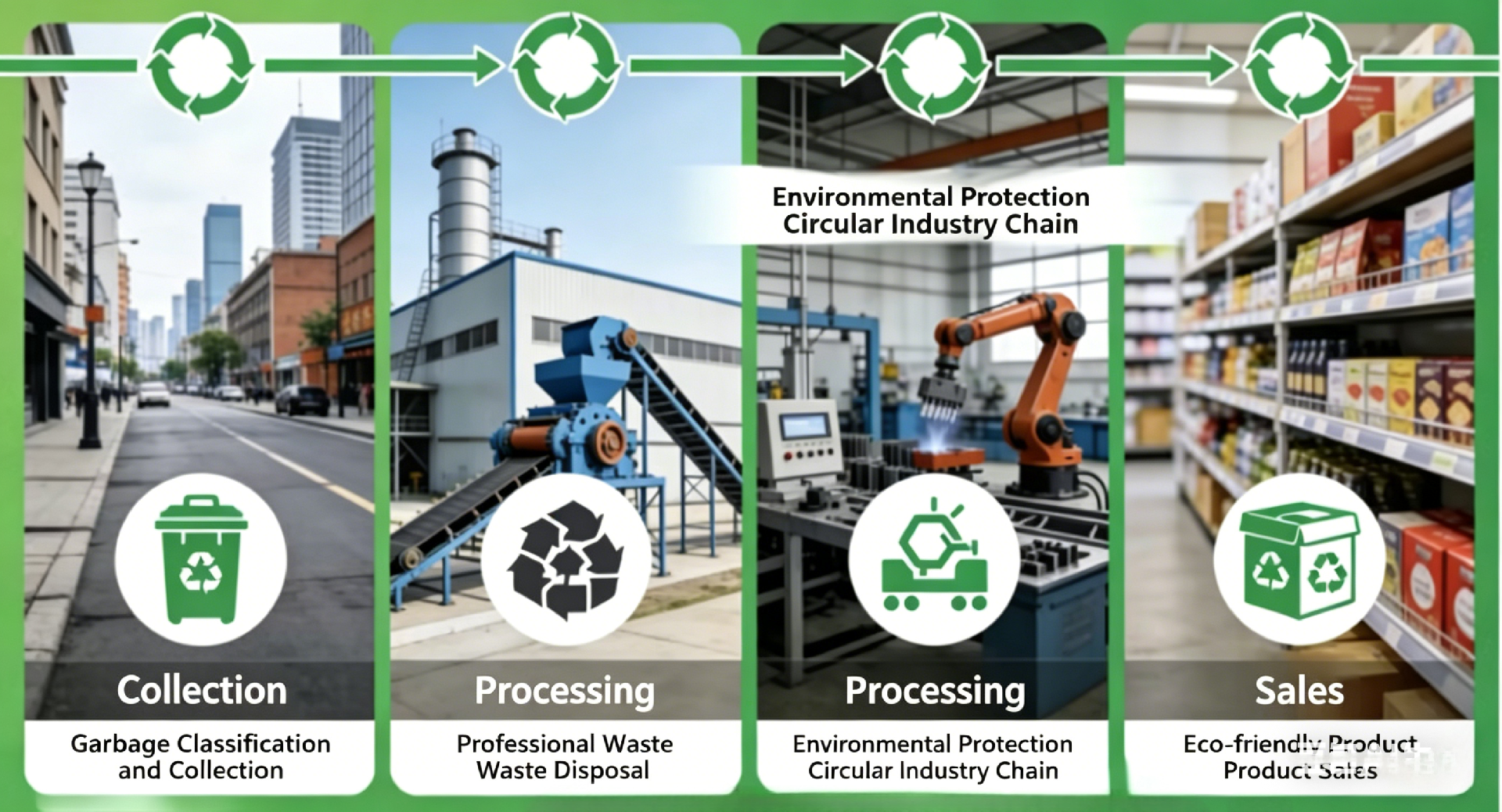
2. Core Technology Roadmap
The roadmap focuses on four key technologies—efficient sorting, aggregate enhancement, on-site treatment, and carbonation-based multipurpose utilization—to address issues such as the low quality of recycled products.
Intelligent Sorting: Combining AI vision with multiple processes achieves aggregate purity exceeding 95% and metal recovery rates exceeding 95%.
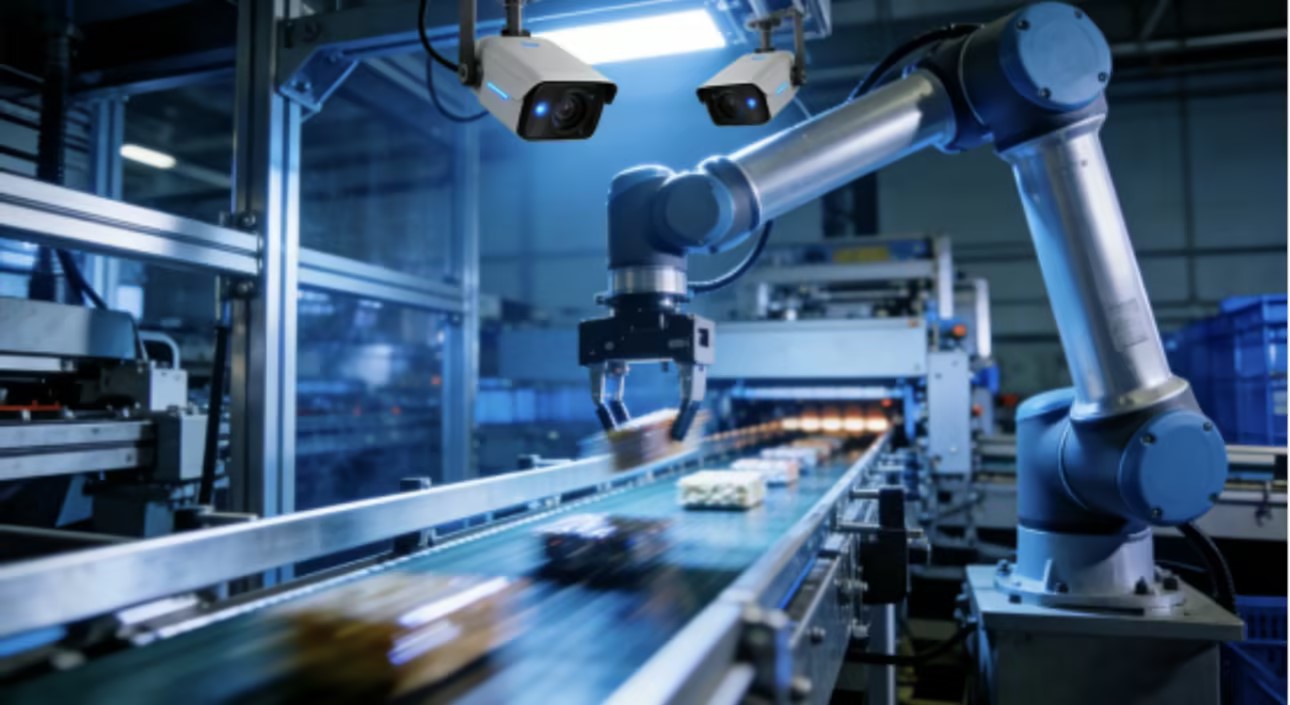
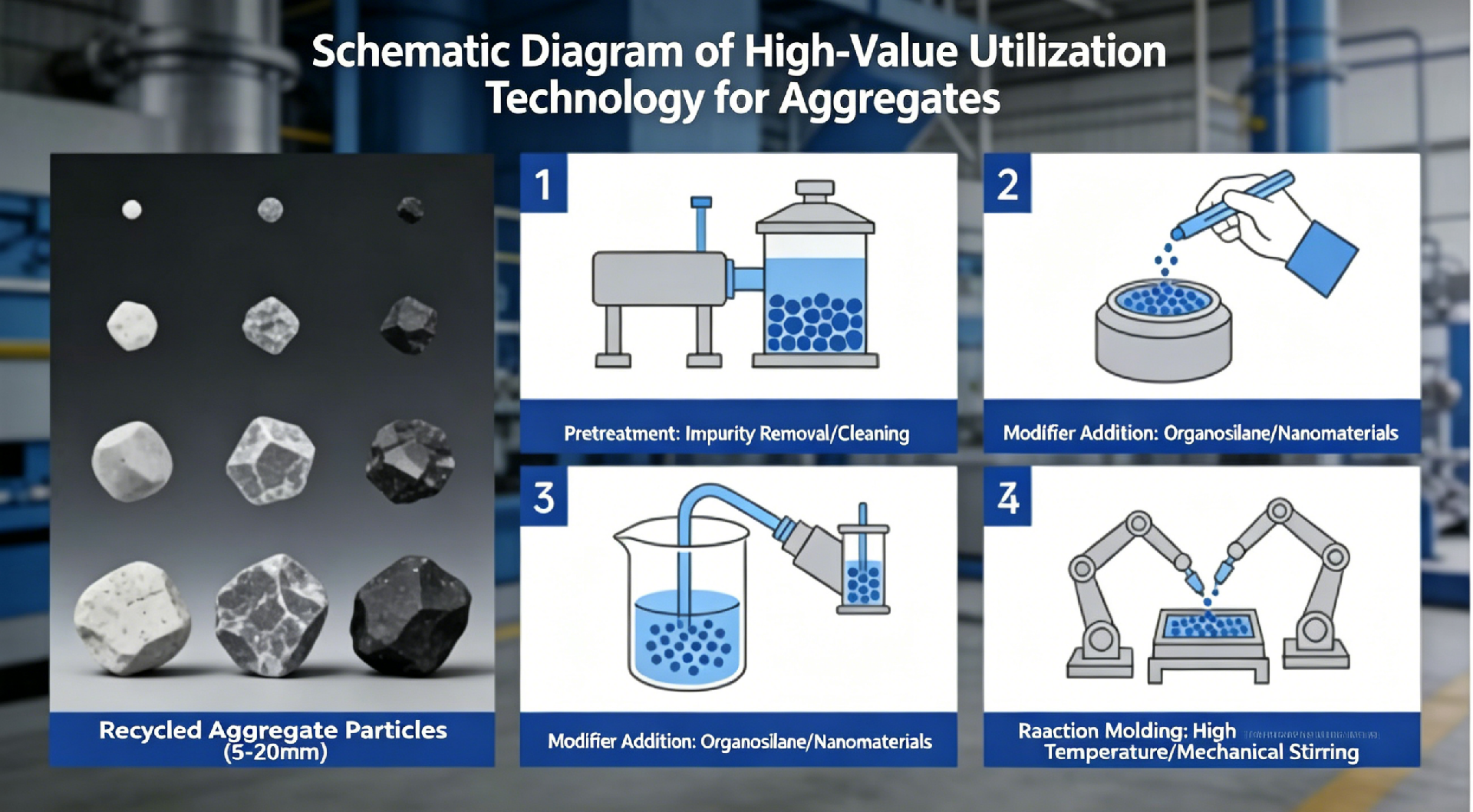
High-Value Aggregate Production: Physical and chemical modification technologies significantly improve the performance of recycled aggregates, enabling the production of high-grade concrete.
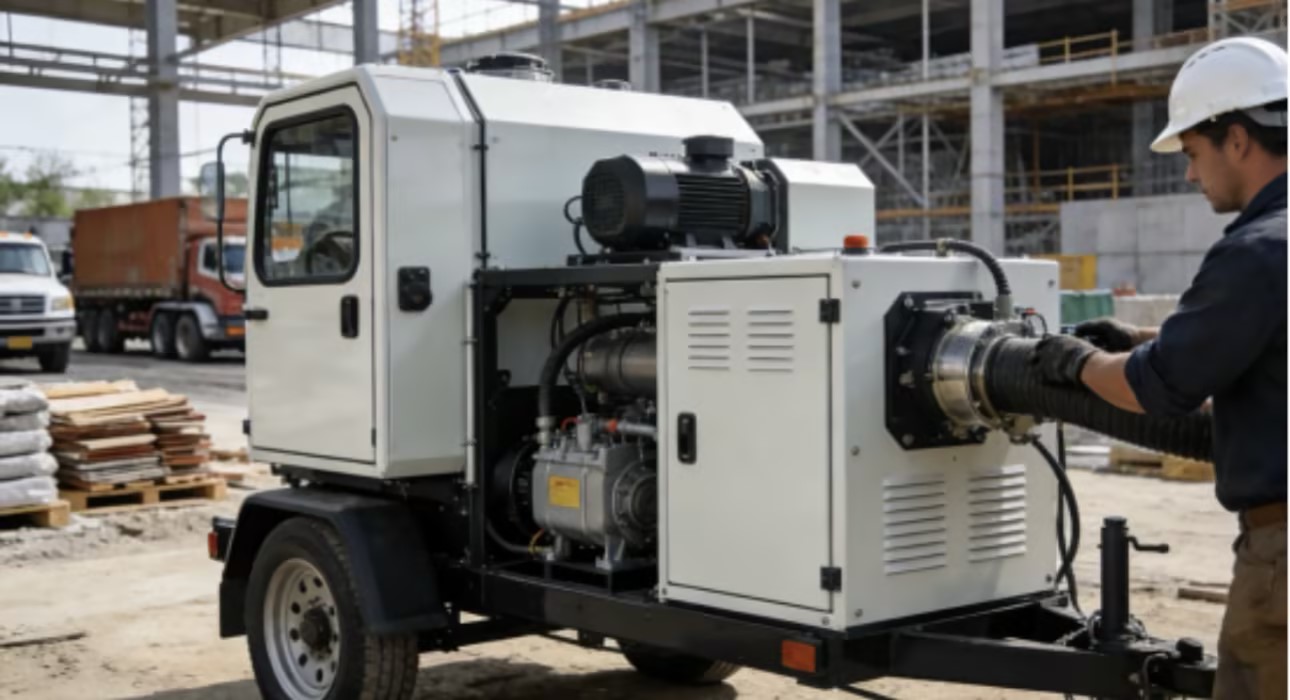
On-Site Treatment: Modular mobile equipment enables integrated on-site operations, reducing transportation costs by up to 60%.
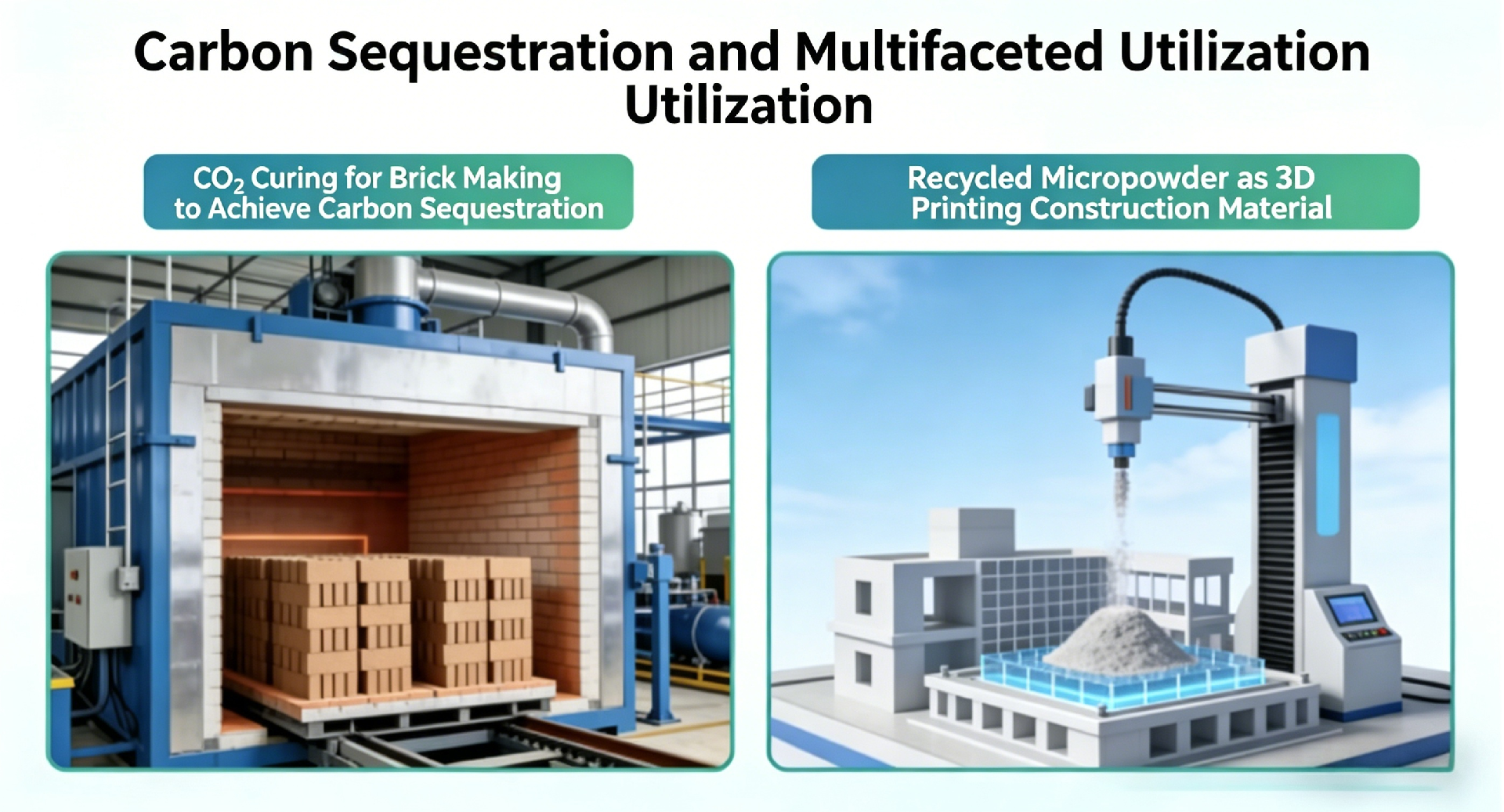
Carbonation-Based Multipurpose Utilization: CO₂ curing for brick manufacturing achieves carbon sequestration, while recycled micro-powder can be used as a raw material for 3D-printed building components.
3. Production Conditions and Supporting Facilities
Processing capacities are matched to project scales (renovation waste: 60–120 t/h; demolition waste: 100–250 t/h), with full-dimensional supporting facilities ensuring smooth operation:
Site: Must comply with functional zoning requirements, conform to territorial spatial planning, and be located away from ecological red lines.
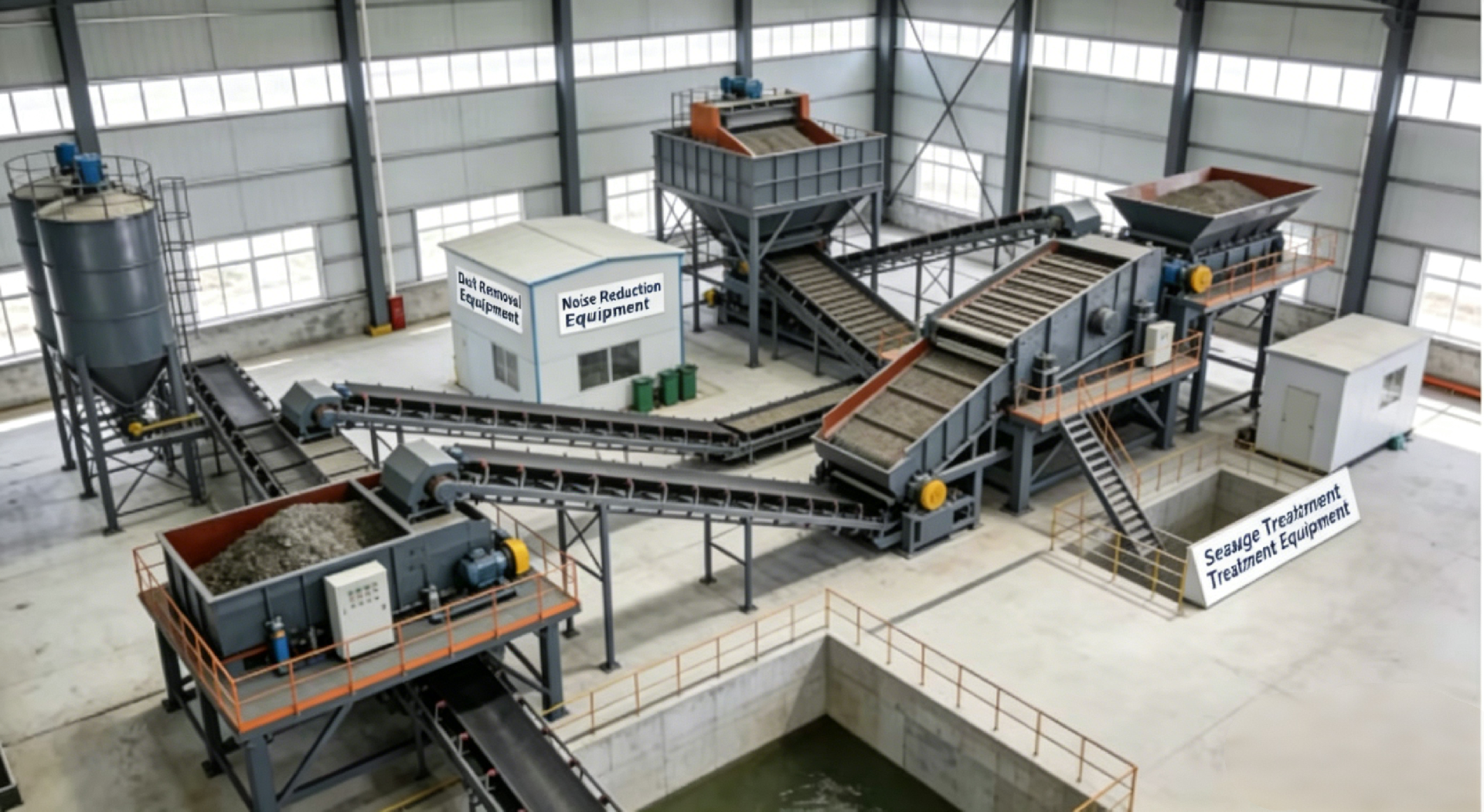
Equipment: Core equipment includes crushers, screens, and intelligent sorters, with mobile units and advanced processing equipment configured as needed.
Environmental Protection: Standard equipment includes dust collection, noise reduction, and wastewater treatment facilities, achieving zero wastewater discharge.
Infrastructure: Convenient transportation access, plus complete utilities, fire protection, logistics systems, and equipment maintenance support.
Auxiliary Facilities: Multiple production lines for recycled products meet diverse manufacturing needs.
4. Product Application Scope
Recycled products offer a wide variety and meet performance standards, enabling full-scenario coverage. Various regions have issued technical specifications clarifying application standards:
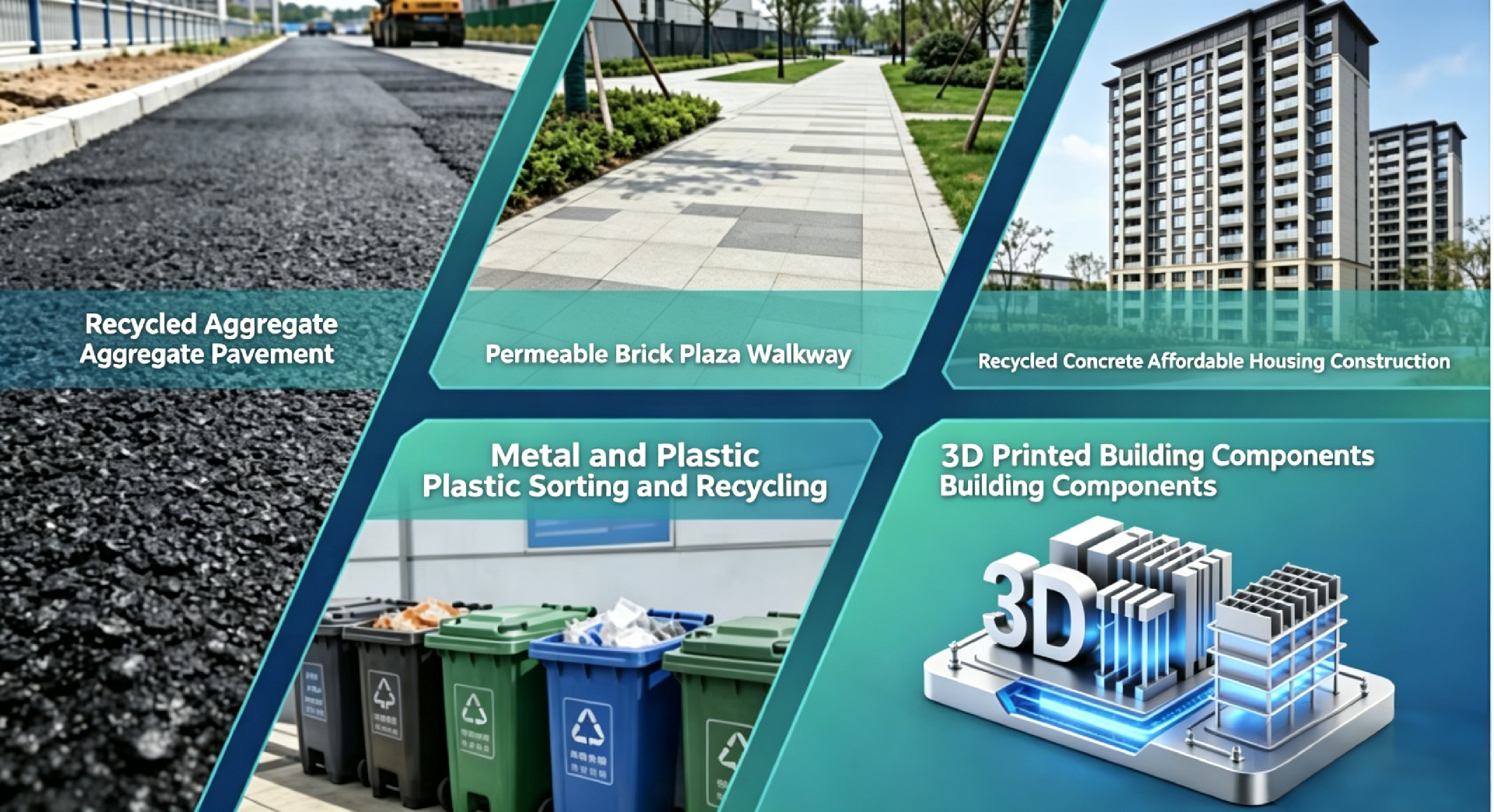
Municipal Roads: Recycled aggregates and solidified soils are used for subbase courses, abutment backfills, and similar applications.
Sponge Cities: Permeable bricks and permeable concrete are used for sidewalks, plazas, and other public areas.
Building Construction: High-grade recycled concrete and prefabricated components are used for building structures, affordable housing, and similar projects.
Material Recovery: Metals, plastics, and wood are separated and then returned to furnaces or reprocessed for recycling.
Innovative Advanced Applications: Recycled micro-powder serves as "ink" for 3D printing, enabling a new digital and green model for construction.
5. Project Benefits
Leveraging a diversified revenue model combining "disposal services + product sales + material recovery + policy subsidies," projects achieve stable returns and strong prospects:
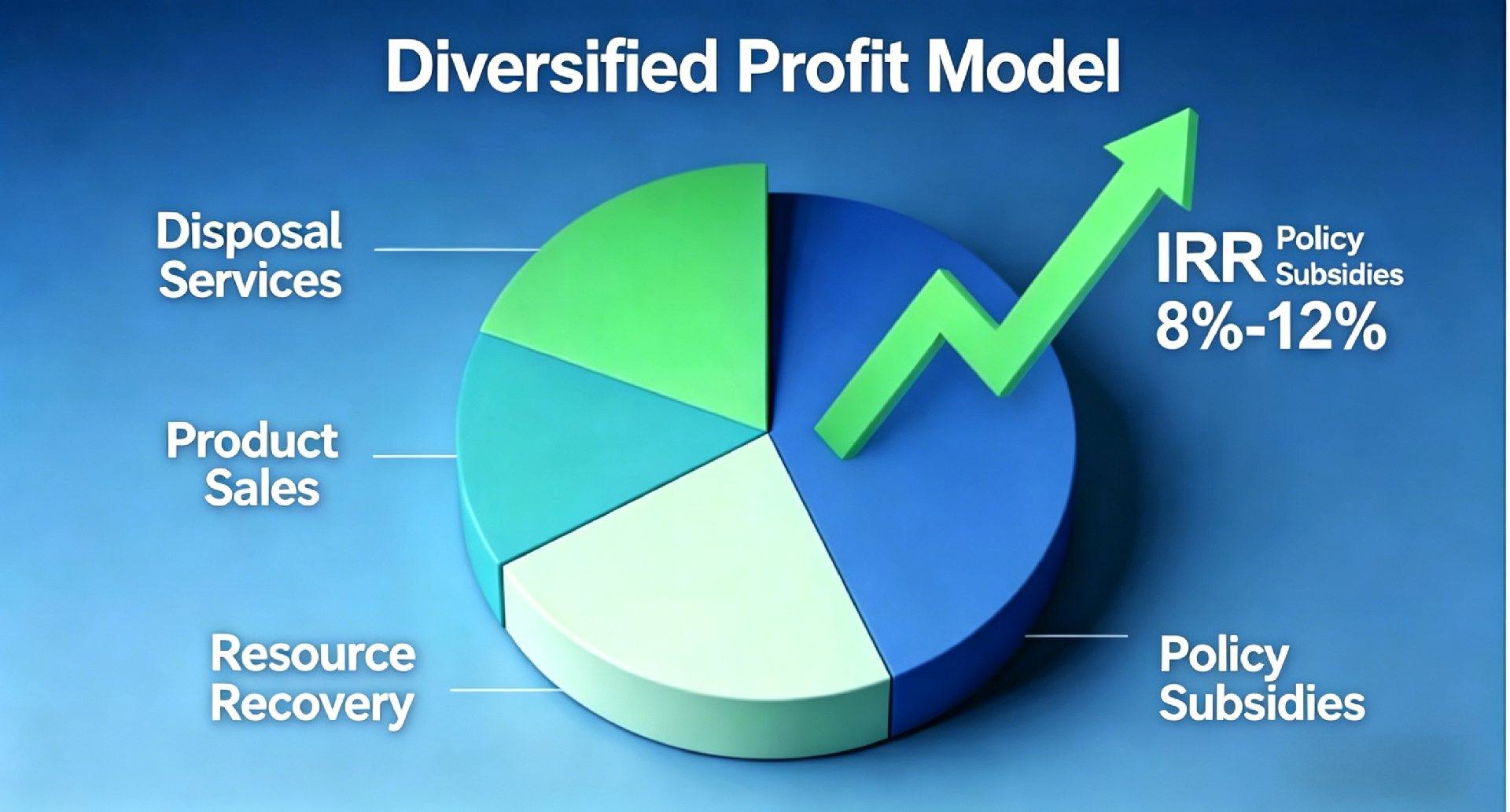
Disposal Services: Provides baseline cash flow, with differentiated fees based on waste type, accounting for over 40% of revenue.
Product Sales: The core growth driver, with high-value recycled products offering strong gross margins, potentially exceeding 66% of revenue.
Material Recovery: Recovery and sale of metals, plastics, and other materials generate additional income.
Policy Subsidies: Multiple support mechanisms include financial subsidies, tax reductions and exemptions, and low-interest loans.
Comprehensive Benefits: Savings on landfill costs, significant carbon reduction and material savings. Scaled projects achieve an IRR of 8–12% with a payback period of 6–12 years.
Construction waste resource utilization transforms "urban waste" into "urban mining," injecting new momentum into green development.
Contact Information
Company Name: Hebi Starlight Environmental Intelligence
Main Products: Shaftless trommel screens, integrated air classifiers, mud and rock separators, shredders, dust collectors, and other environmental protection equipment
Hotline: 16663920002
-
Starlight Environmental Intelligence – Turning Coal Gangue into Treasure, Unlocking a New Path for Solid Waste Resource Utilization2026-05-13 14:12:02
-
Turning Waste into Treasure! Construction Waste Resource Utilization Technology Unlocks a New Path for Green Development2026-04-08 13:31:48
-
Popular science of mine hoist2024-01-11 16:33:48
-
Mine Super Elevator – The Core Mine Hoist Guide2026-06-06 14:55:56
-
Urban Renewal Construction Waste: Challenges and Solutions2026-06-04 10:24:06
-
Struggling with Clay-Stone Mix? Xingguang Clay-Stone Separator – Clean Aggregates Made Easy.2026-05-20 10:50:55
-
Solid Waste Treatment Boom – Xingguang Leads the Way.2026-05-02 10:37:56
-
Starlight Environmental Intelligence Solves Screening Challenges of Wet, Sticky, and Entangling Materials with Shaftless Trommel Screen2026-04-26 10:58:29
-
How to Solve Solid Waste Sorting Challenges? Starlight Environmental Intelligence’s Integrated Air Classifier Ushers in a New Paradigm for Green Sorting2026-04-21 13:11:00
-
Dust-Free & Energy-Smart: Starry Eco Revolutionizes Industrial Conveying2026-03-11 10:46:24
-
New "Ten Rules for Solid Waste" Policy Takes Effect, Injecting Powerful Momentum into the Waste Resource Utilization Industry and Unfolding a Billion-Yuan Green Market Blueprint2026-03-01 14:29:33
-
Xingguang Mining Delivers Core Mining Equipment to a Coal Mine in Guizhou2025-08-23 13:12:55
-
Steel Backbone: The Mine Fight of JK Mine Hoist2025-07-14 08:20:03
-
Xingguang Mining Shines at China-Africa Economic and Trade Expo, Unveiling a New Chapter of Win-Win Cooperation2025-06-23 10:31:00
-
Xingguang Mining Machinery: Innovating Mine Hoisting Solutions2025-06-19 08:27:25
Quick
consultation
The Hebi starlight Mining Machinery Manufacturing Co., Ltd. was registered as a limited liability company on March 23, 1997, is a professional company that produces and sells mining hoisting winch, mine hoist and accessories.
Products
Copyright © 2025 Hebi Xingguang Mining Machinery Manufacturing Co., Ltd.